Walk In Worth. Live Polished. Walk In Worth. Live Polished. Walk In Worth. Live Polished. Walk In Worth. Live Polished. Walk In Worth. Lived Polished.
When Bloodline Becomes Battlefield
This piece explores the painful reality of mother-daughter relationships shaped by generational trauma, using the dynamic between Blac Chyna and Tokyo Toni as a lens. It unpacks how unresolved wounds can repeat across generations and how awareness is the first step to breaking the cycle.
Bri
4/13/20267 min read
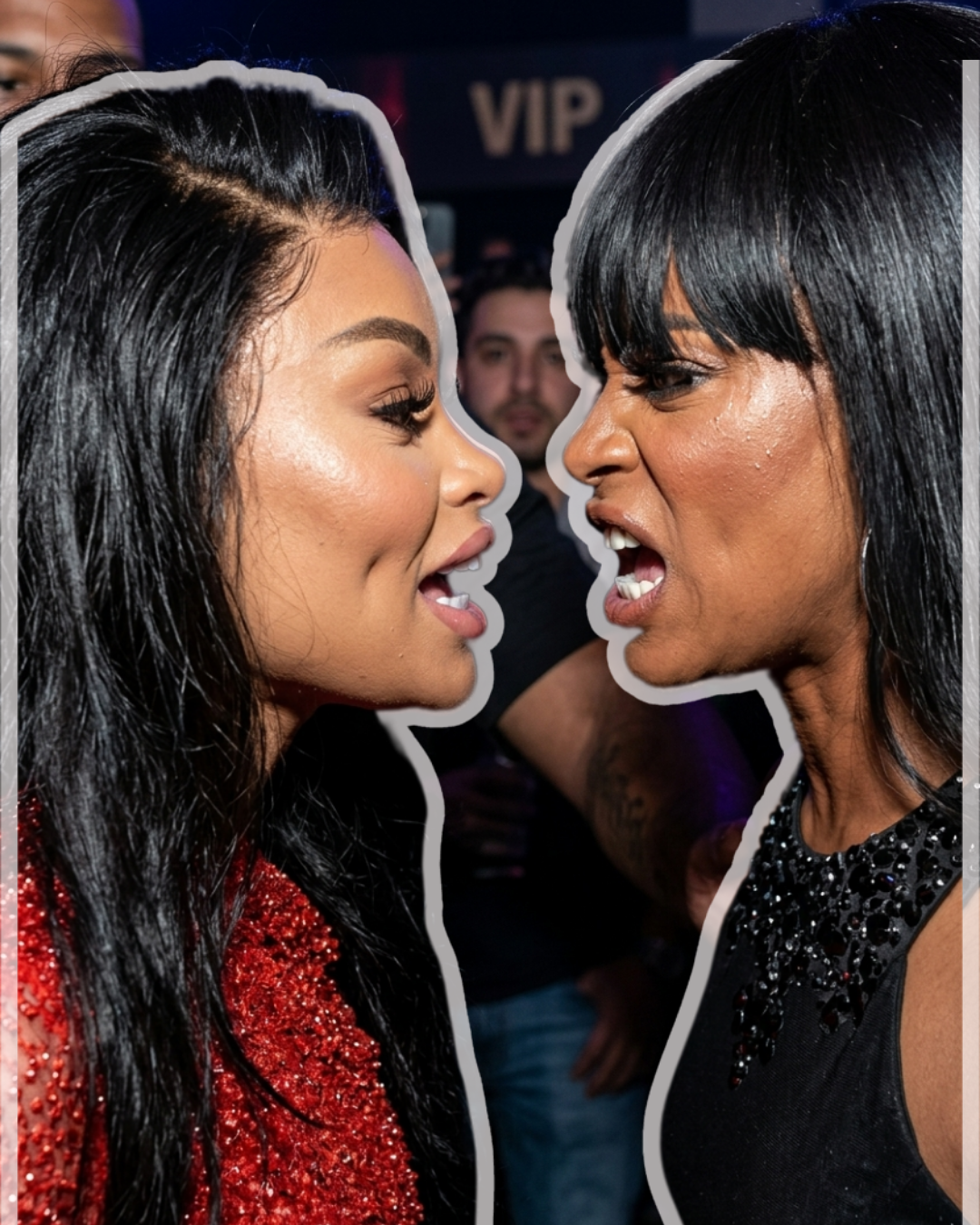
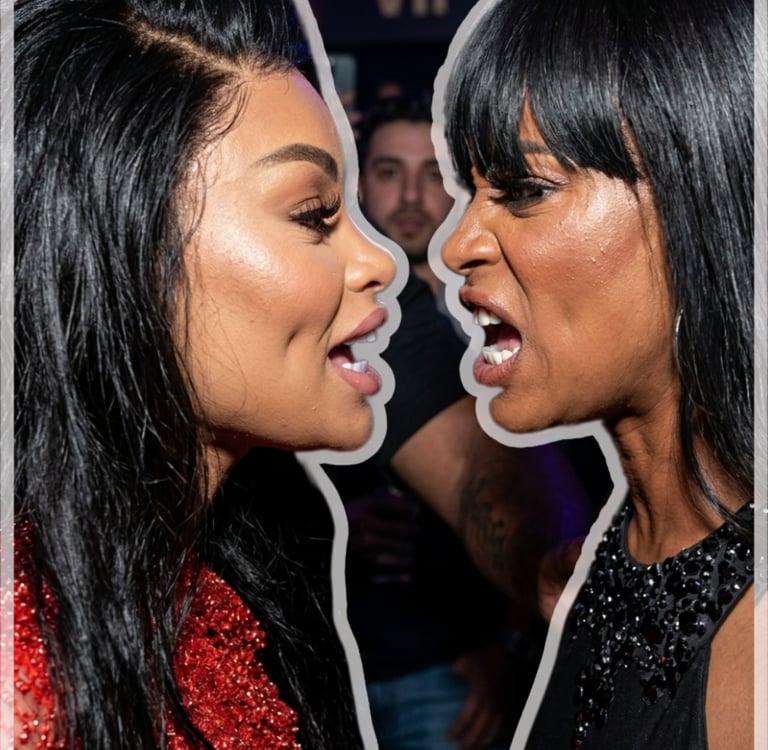
"They will be divided, father against son and son against father, mother against daughter and daughter against mother." (Luke 12:53 paraphrased).
When I watched Tokyo Toni publicly tear down her daughter, Blac Chyna, in a recent rant. Spewing anger, accusations, and hurt into the camera, the first thought that came to my mind was the above Scripture.
Not because I think this is a prophetic curse tied only to modern culture, but because this verse captures the deep human conflict we sometimes carry in blood relationships, especially when emotional wounds run deep.
And what we witnessed wasn’t just celebrity drama. It revealed something far darker and more universal: generational pain repeating itself publicly.
And while it’s easy to watch from the outside and form opinions, moments like this should cause us to reflect inward.
Because for some of us… it feels familiar.
A Relationship Marked by Pain and Public Feuds
Tokyo Toni and Blac Chyna’s history isn’t new. The internet has seen it all for years.
For years, Toni has lashed out at her daughter: calling her ‘spoiled,’ blaming her parenting, and making extreme accusations. Watching it all has been painful.
Their dynamic didnt start overnight.
Despite growing up with privilege, Tokyo's father TC Tolliver, a drummer for The Plasmatics, her path took her into stripping at a young age. Partially to provide for herself and Blac Chyna.
When Toni was 16, she became pregnant with Chyna after a relationship with an older man from her neighborhood. A married man who never played a role in raising or supporting his child financially.
As Chyna grew into her teen years, she developed a relationship with her biological father and has spoken highly of him.
Toni’s jealousy and resentment toward her daughter seems tied to this. She felt she had done all the work while he contributed nothing. This tension, compounded by her own unresolved trauma and struggles, has fueled years of emotional abuse.
On Chyna's Zeus Network show, Toni screamed at Chyna, gaslit her, accused her of being “mentally unstable,” and even tried to fight her.
Through most of it, Chyna stayed calm. She only lost it in flashes and you could tell she had learned to control herself because she had to survive.
Over time, Toni’s behavior has revealed deep-seated jealousy: Chyna followed in her mother’s footsteps in stripping but became famous and financially successful on a scale Toni likely never expected.
Instead of pride or support, Toni has often reacted with entitlement, anger, and public accusations, including claims that Chyna tried to sacrifice her to the Illuminati.
In a recent outburst, Toni threatened her daughter, saying she would “Marvin Gaye her”. A chilling reference to a musician who was literally killed by his father.
This marks a particularly extreme escalation, highlighting the demons Toni continues to battle.
It’s impossible to blame Chyna for limiting contact or protecting herself.
Both women carry pain, trauma, and unresolved wounds. And while it’s heartbreaking to witness, it also reminds us that some cycles of hurt need prayer, awareness, and divine intervention to break.
My Story: Mirror, Not Mockery
When I saw these videos, something in me didn’t feel like I was watching just celebrity drama. I saw something familiar because I lived it.
For most of my childhood, I didn’t like my mother, and in many ways I felt she didn’t like me either. It often felt like she punished me with words and actions, as if she resented me for existing.
Looking back, it’s painful to recall how harsh and cold it sometimes felt, even unloving, and it left deep emotional scars that I carried for years.
Like Tokyo Toni’s reactions to Blac Chyna, my mom's behavior wasn’t mere criticism, it was emotional violence, though she probably didn’t see it that way.
My mom was verbally harsh, physically stern, and emotionally unavailable. Not because she didn’t love me… but because she didn’t know how to love me well.
For most of her adolescence, she had been hurt, mistreated, and poorly parented herself. Just like the person she instinctively became.
How could she love deeply when she never felt it?
That’s the question that birthed years of frustration, pain, and distance between us.
Understanding the Cycle
This is what psychology calls a generational cycle of trauma. Without guidance on healthy emotional attachment, the next generation often repeats the pattern unconsciously.
That’s exactly why relationships like Blac Chyna’s and Tokyo Toni’s don’t just fall apart, they explode.
The hurt that wasn’t healed in one generation often becomes the wound carried into the next. And unless someone breaks the cycle, it keeps looping.
How I Broke the Cycle
In my 20s, everything started to shift.
I began reading self‑help books.
I started journaling, reflecting, and understanding my mom’s past pain.
I saw how her childhood shaped her behavior. Not to justify the wounds, but to understand their origins.
I realized this wasn’t about hating her, it was about seeing her limitations and loving differently, consciously, and with better tools than she ever had.
And it changed everything.
Rather than reacting emotionally, I learned to respond emotionally well. Rather than expected love, I learned to give myself what I needed first. And instead of replicating her behavior, I made a conscious choice to do better for myself and for my legacy.
Near the end of her life, we saw improvements. Not perfect. Not “Gilmore Girls” drama‑free, but real healing took place.
I learned you don’t have to be perfect to change the cycle; you just have to be aware and willing to grow.
Healing Is Possible - Even When It Feels Impossible
For anyone reading this whose heart aches because of a strained relationship, especially with your mother, know this: God doesn’t condemn you for pain you inherited. He invites you to heal from it.
If there’s one thing Scripture consistently teaches, it’s that what is broken can still be restored.
How Do You Honor a Mother Who Hurt You?
Scripture tells us clearly:
“Honor your father and your mother…” (Exodus 20:12)
But what happens when honoring your mother feels… complicated?
When the person who was supposed to nurture you is the very one who wounded you?
If we experienced this kind of treatment from anyone else, we would cut them off without hesitation. But when it comes to a mother, it’s different.
There’s a bond that’s supposed to exist. A natural connection. And for many, there’s also culture, guilt, or the belief that “you only get one.”
So what do you do?
1. Accept Their Humanity Without Excusing Their Behavior
Your mother is human. Flawed. Shaped by her own pain, her own upbringing, and her own limitations.
Acceptance doesn’t mean agreement. It doesn’t mean what she did was right. It means you stop expecting her to be who she has never shown you she can be.
Because when you constantly judge someone for what they lack, you risk becoming hardened in the very areas you resent.
2. Lead by Example, Not Emotion
I understand how hard it is not to be petty. Not to match energy. Not to prove a point when you feel constantly disrespected.
I struggled with that too.
But responding with maturity instead of emotion does something powerful:
It sets a standard
It creates boundaries without drama
And over time, it commands respect
Change doesn’t happen overnight. But consistency in your behavior will always speak louder than reaction.
3. Pray for Her Even When You Don’t Feel Like It
Jesus said:
“Pray for those who mistreat you.” (Luke 6:28)
Let’s be honest, at first, it may feel forced. You may not even mean the words when you say them. But keep doing it anyway.
Because something shifts when you pray for someone who hurt you.
Your heart softens. Your perspective changes. And once your heart changes, God can begin to move. Not just in her life, but in yours.
4. Forgive Her For Your Freedom, Not Her Comfort
Unforgiveness is heavy. It keeps you tied to the pain. It keeps you in the role of judge, jury, and vindicator.
But that was never your role. That belongs to God.
Forgiveness doesn’t mean access or restored trust, it means releasing the weight so their actions no longer control you.
5. Love From a Distance When Necessary
For those of you who no longer live with your mother, it is okay to create space.
You can honor your mother without tolerating abuse. Because how can a heart heal when it’s constantly being wounded?
Distance is not disrespect. Sometimes, it’s wisdom.
6. If You Still Live With Her, Make a Plan
If you are still in that environment, do what you can to create space. And if that’s not possible, start making a plan to leave.
Quietly. Not everything needs to be announced. Because if your situation mirrors mine, there may be attempts to sabotage your growth. To keep you trapped in the same painful patterns."
7. Strengthen Your Relationship With Jesus
This is the foundation of everything. Because on your own, it is hard not to be bitter. Not to seek revenge. Not to prove a point.
But Jesus will convict you gently. He will show you where you need to heal. He will refine your reactions, your thoughts, and your heart posture.
And over time, you won’t even recognize the version of yourself that once reacted out of pain.
And This Is Where Your Journey Begins
If you want to understand how to recognize emotional cycles, break unhealthy patterns, and establish a new legacy of love, that’s exactly what I unpack in The Polished Path.
There’s a chapter in there devoted to recognizing sources of emotional misalignment. Whether from parents, past relationships, or cultural messages, and how to walk forward into God’s design instead of repeating old pain.
Start building a legacy that rewrites old wounds with peace and grace. Get your copy today.
Your pain does not define you. Your history does not trap you.
With God, intention, and emotional awareness, you can heal what was never meant to be your burden to carry alone.
If this message resonated, share it so someone else can see that love rooted in healing is stronger than hurt rooted in history.
-Bri